


Overview #
Astral is a local agent for archival TESS analysis. Astral selects the next evidence to collect for signals that may show a transit.
Astral is a triage system. It does not confirm planets. It does not calculate false-positive probabilities. A human must review any candidate.
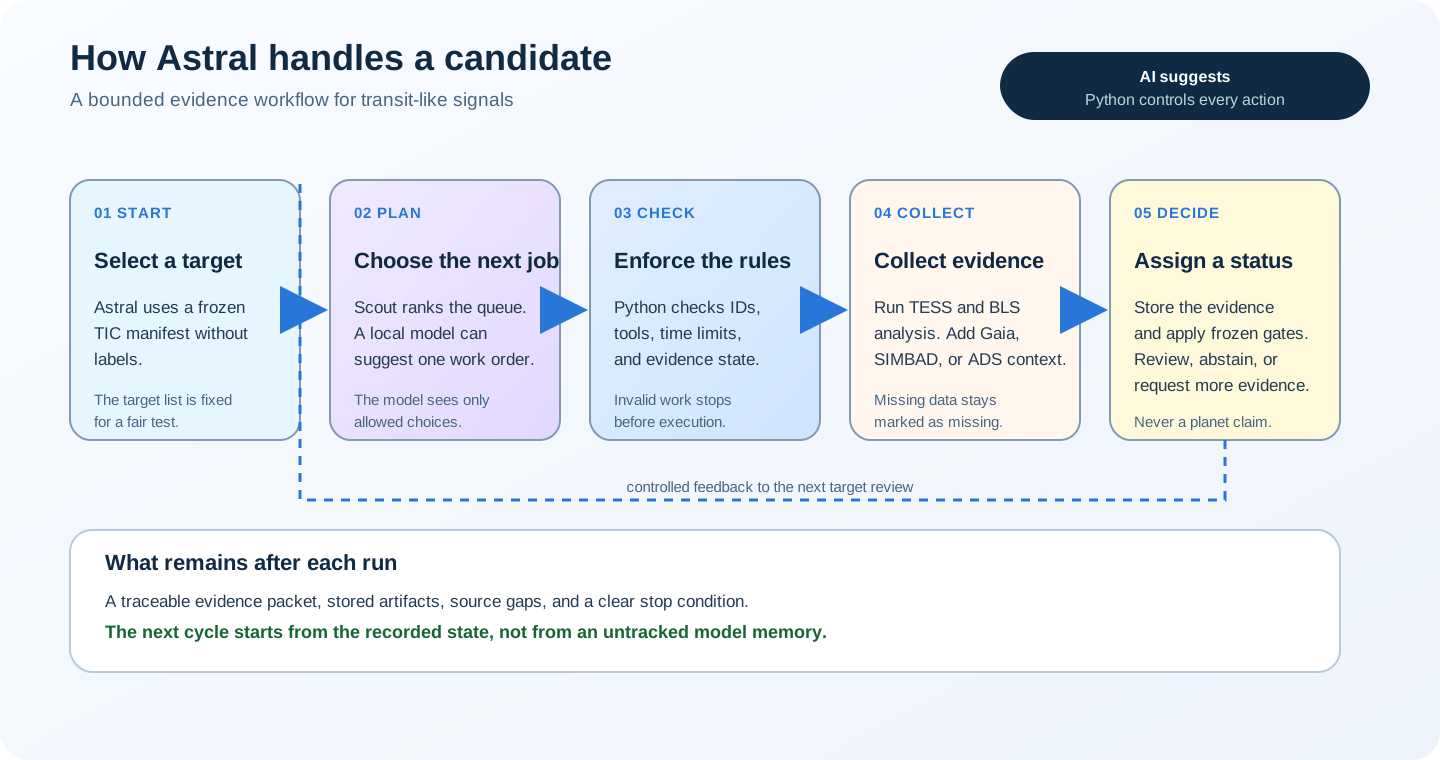
The workflow uses a frozen TIC manifest, Lightkurve, BLS, archive queries, and catalog context from Gaia, SIMBAD, ADS, and the literature. A local Qwen model can prioritize work. Python validates every action. SQLite stores the workflow state and evidence artifacts.
Current progress #
The offline workflow has 13 passing tests. The tests cover candidate review, abstention, source gaps, evidence dossiers, and queue exhaustion.
A live check succeeded for the NASA Exoplanet Archive and SIMBAD. ADS needs credentials. MAST, Gaia, and the live manifest remain limited in this environment.
The agent has five roles: Scout, Analyst, Context, Skeptic, and Reporter. A
review_candidate is a provisional triage state. It is never a confirmation.
Architecture #
The workflow has explicit controls. Qwen can suggest a work order. Python validates the TIC IDs, allowed actions, time limits, and evidence state before it runs the action.
Evidence and diagnostics #
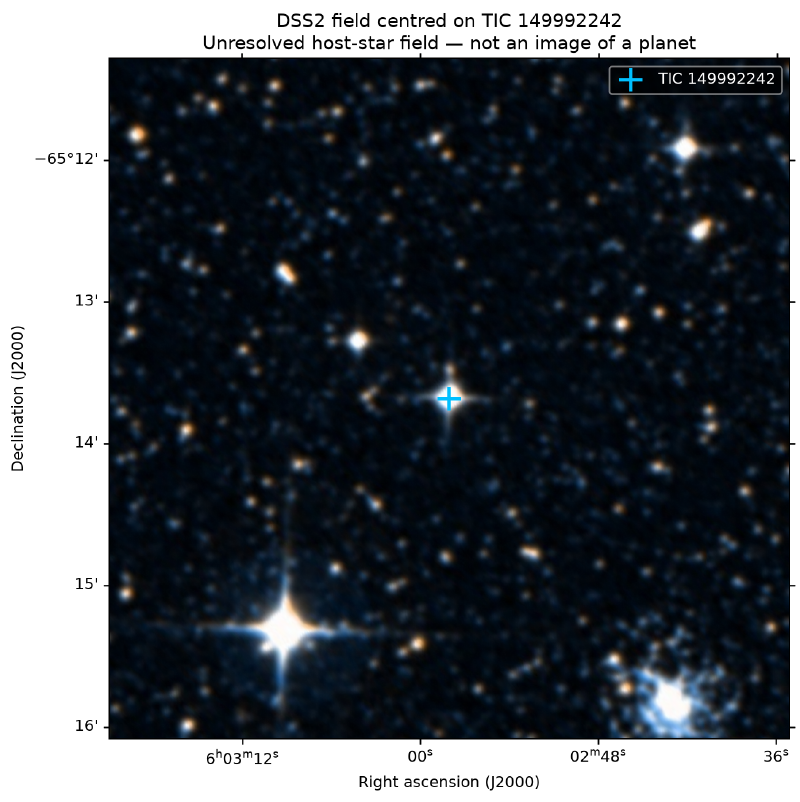
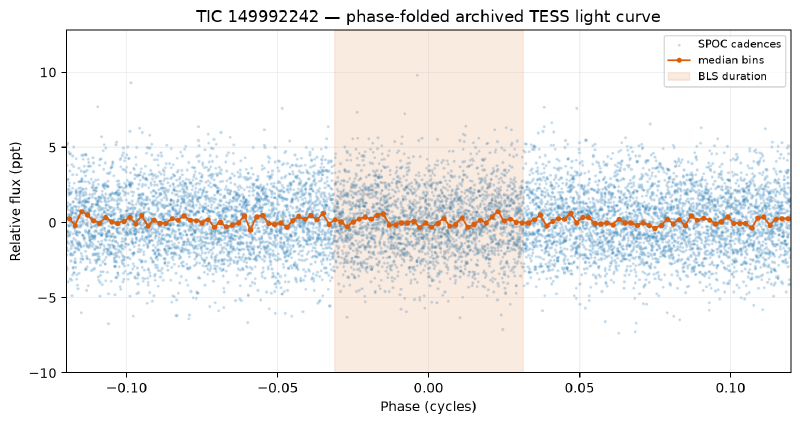
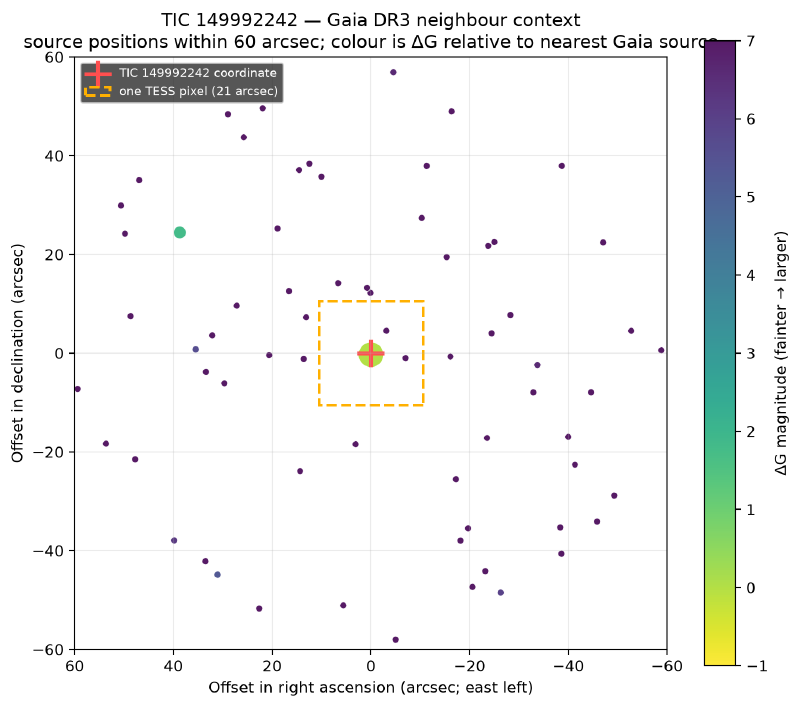
The current implementation uses a frozen label-blind manifest, bounded multi-sector SPOC analysis, deterministic BLS and diagnostic gates, and content-addressed artifacts. External context is retained as provenance and evidence; it cannot silently change the signal disposition.
Next steps #
- Build a calibrated holdout cohort before starting a five-candidate search.
- Complete multi-sector signal handling and test recovery on a frozen cohort.
- Calibrate the LEO/PRF pixel adapter before it affects any disposition.
- Improve live-service recovery and provenance review.
- Add a human audit of the evidence dossiers.
- Prepare the current system and evidence package for a possible professor review. This review has not happened yet.
The goal is an auditable evidence trail and a controlled stop condition. The system does not produce an automated astronomical conclusion.
Tools #
- Python with typed schemas and deterministic service adapters.
- Lightkurve/BLS for the frozen signal-analysis path.
- SQLite WAL for workflow state, idempotency, events, model calls, and case snapshots.
- Local Ollama models only through constrained JSON plans.
- Offline fixtures for repeatable tests when archive services are unavailable.